

Things to Do in N'Djamena in November
November weather, activities, events & insider tips
Low Season · Budget Friendly
November Weather in N'Djamena
Long-run averages for November
98°F (37°C)
High Temp
66°F (19°C)
Low Temp
0.0 inches (0 mm)
Rainfall
23%
Humidity
9
Sunny-Day UV
⚠ Extreme daytime heat reaching 37°C (98°F) with intense direct sun demands continuous hydration and midday shade. Heat-related illness is a real risk for unacclimatised visitors, in the first 48 hours. Drink constantly. Seek shade.
⚠ Late November may bring the first Harmattan dust from the Sahara, reducing air quality and coating surfaces with a fine gritty film. Travelers with asthma or respiratory conditions should carry medication and consider a dust mask for outdoor activity. Pack accordingly. Check supplies.
⚠ The large diurnal temperature swing, roughly 18°C (32°F) between afternoon high and overnight low, catches visitors off guard. Dress in layers for evening outings and carry a light layer after sunset. Mornings surprise. Prepare for both.
Making the most of November in N'Djamena? Browse tours and activities in N'Djamena on GetYourGuide.
Is November Right for You?
Weigh the advantages and considerations before booking
Advantages
- + The rains have ended. The Sahel still wears its brief green season. South of N'Djamena, the scrubby acacia flats, brown and cracked most of the year, hold a thin wash of emerald through November. The Harmattan sucks the moisture out by January. This is the one month where the landscape photographs well. The air stays clear enough to see across the Chari River to Kousseri on the Cameroonian bank.
- + Humidity has dropped from August's punishing 84% to a bearable 23%. Evenings cool to around 19°C (66°F). That eighteen-degree swing between afternoon and nightfall is N'Djamena's version of relief. By 7 PM the terrace restaurants along Avenue Charles de Gaulle fill up. Cold Gala beer sweats in the hand. The city's social life kicks into gear in a way the wet months never quite manage.
- + November sits in the lull between the rainy season's mud and the deep dry season's dust. Roads that were impassable laterite soup in August have firmed up. The Harmattan haze that will choke visibility by January hasn't arrived yet. For overland travel to Zakouma National Park or the lakes around Bol, this is likely the best logistics window of the year.
- + Republic Day on November 28 brings the capital alive. Military parades roll through the streets. Traditional dance troupes from across Chad's two hundred ethnic groups perform. The concentration of cultural performance you won't find on any other single day. The Place de la Nation fills with spectators from early morning. Evening celebrations around the Rond-Point de la Liberté run late.
Considerations
- − The daily high still hits 37°C (98°F). Shade is scarce. By 1 PM the concrete and sand radiate heat back at you from every surface. The air feels like it's been run through an oven. Outdoor activity between noon and 4 PM is miserable unless you're acclimatised. Even locals retreat indoors during the worst of it.
- − N'Djamena's tourism infrastructure remains limited. Accommodation options are thin. They concentrate in the Quartier Résidentiel and along the river near Farcha. What exists tends to be priced for the NGO and diplomatic crowd rather than leisure travelers. Expect to pay more for less comfort than you would in most West African capitals.
- − Late November can bring the first tendrils of the Harmattan. This dry Saharan wind carries fine dust south across the Sahel. It is not yet the full curtain of haze that descends in December and January. Sensitive throats will notice it. Sunsets start turning that milky amber that signals the dust is building.
Short on time in November? See day trips around N'Djamena on GetYourGuide.
Best Activities in November
Top things to do during your visit
By November, the rains that softened N'Djamena through the summer have fully retreated. The city exhales into dry heat. Daytime temperatures push toward 37 degrees Celsius. The humidity has plummeted from its August peak near 84 percent down to a parched 23 percent. This makes the heat feel angular and clean rather than suffocating. The air carries the faint mineral tang of sun-baked laterite. The dust that will thicken through December and January is, for now, still thin enough that the Chari River glimmers copper at sunset. Nights drop to a merciful 19 degrees. Cool enough that tea vendors along Avenue Charles de Gaulle pull out charcoal braziers after dark. The sweet woody smoke of their fires drifts across the sandy lots where neighbors gather to talk. This is the hinge month between wet and dry. Locals know it by the pace of the river. The Chari and its tributary the Logone are still swollen from months of upstream rain. Their banks are soft and silty, attracting herons, egrets, and the occasional monitor lizard that basks on exposed mud shelves in the morning warmth. Fishermen stand thigh-deep near Chagoua market, casting wide circular nets that flash silver against the brown water. The Grand Marché operates at full intensity now that the unpaved lanes between stalls are no longer slicked with rain. The smell of dried fish, ground peanut paste, and smoked red pepper hangs in the still afternoon air. November also marks the opening of safari and desert expedition seasons across Chad. This makes N'Djamena the natural staging point for journeys south to Zakouma or northeast into the Ennedi massif. Both become accessible as tracks dry and harden. For travelers arriving in N'Djamena, accommodation options cluster along the Chari riverfront and near the commercial district around Rue de Quarante Metres. The city's handful of internationally managed properties and locally owned guesthouses sit within walking distance of restaurants, banks, and the Musée National. The city rewards those who slow down. Spend a morning watching pirogues on the Chari. Sip ginger juice under a neem tree in the afternoon. Listen to the clatter and shout of a neighborhood football match at dusk. N'Djamena is not a city that performs for visitors. It simply continues. The pleasure is in joining its rhythm.

N'DJAMENA The Elephant-Dandi rock and Doughia tourist resort
guided_experienceThe road south from N'Djamena toward Doughia crosses flat Sahelian scrubland before the Elephant-Dandi rock formation rises from the plain. Its wind-carved sandstone flanks evoke a pachyderm mid-stride, while the Doughia riverfront offers shaded rest spots, breeze off the water, and freshly grilled capitaine fish.
The most accessible geological spectacle near N'Djamena, pairing a wind-sculpted sandstone monolith with riverfront shade and local cooking that you will not find in the capital's restaurants.
Insider tip: Depart N'Djamena before six in the morning to reach the rock while the low-angled light throws its contours into sharp relief. The stone is still cool enough to touch. By midday the surface is too hot to rest a hand against.
This month: November's zero rainfall and dropping humidity mean unobstructed visibility and dry tracks. The drive is smoother than any month from June through October.

SAHARA -Self Drive Ennedi
otherA self-drive crossing of the Ennedi plateau from N'Djamena traverses open desert and rust-colored sandstone canyons, Toubou rock art, silent arches, and star-filled Saharan nights.
One of the few places on Earth where you can drive yourself through a landscape of natural arches, prehistoric rock art, and absolute solitude. No paved roads. No other vehicles for days at a stretch.
Insider tip: Carry at least twice the fuel you calculate needing. Soft sand sections in the approach corridors burn fuel at nearly double the rate of hard-packed reg. The nearest resupply is often a full day behind you.
This month: November is the first reliably dry month after the rains. The desert tracks have had just enough time to firm up. Seasonal guelta pools in the Ennedi canyons still hold water, attracting resident crocodiles and birdlife that vanish by February.

Visit of the Ennedi Nature Reserve 10 days
otherTen days inside the Ennedi Nature Reserve, a UNESCO World Heritage site, with sandstone arches, guelta pools, Saharan crocodiles, Toubou guides, and hidden rock-art galleries.
A guided immersion into one of the Sahara's most dramatic geological reserves. The rock art alone rewrites your understanding of what this landscape once was.
Insider tip: Request that your guide include the Aloba Arch, one of the tallest natural arches in the world. Not every operator routes through it by default. It requires a short detour that is easy to arrange but transformative to witness.
This month: November marks the opening of the Ennedi travel window. The desert floor has dried enough for vehicle passage. The guelta water levels are at their annual peak, giving the best chance of spotting the endemic Saharan crocodile population.

ETNIE - Traditional Gerewol dances
otherThe Gerewol is a Wodaabe courtship ceremony in which young men paint faces with red ochre and pale clay, line their eyes with kohl, arrange headpieces, and perform a synchronized dance displaying the whiteness of their teeth and the expressiveness of their eyes.
A front-row encounter with one of the most photogenic and least commercialized ceremonial traditions in Africa. Performed by a community that has maintained these dances across centuries of Sahelian migration.
Insider tip: Sit with the older women who serve as judges of the dance. They will point out subtleties in the men's facial expressions and costume details that a foreign eye misses entirely. Their commentary, translated by your guide, transforms the spectacle into a legible narrative.

SAFARI - Zakouma National Park
otherZakouma National Park in southeastern Chad offers dry-season wildlife concentrations around shrinking waterholes, recovering elephant herds, enormous waterbird colonies, antelope alarm calls, predator activity, and dawn savanna sounds and smells.
One of Central Africa's great wildlife spectacles. Recovering elephant herds, enormous waterbird colonies, and big cats congregate around seasonal water in a park that has become a model for anti-poaching success across the Sahel.
Insider tip: Ask your operator to schedule at least one night at the Tinga camp near the Salamat floodplains. The waterbird colonies there, including saddlebill storks and crowned cranes, are densest in the weeks just after the park opens. Before water disperses across the landscape.
This month: November is the first month of Zakouma's dry-season opening. The remaining surface water concentrates wildlife into viewable densities. Elephant herds of several hundred gather at the larger pans. Predator activity around these aggregations is at its annual peak.
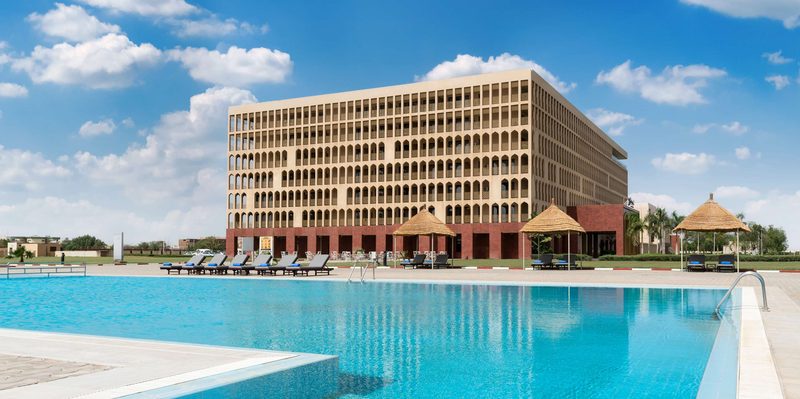
Where to Stay in N'Djamena in November
Hand-picked hotels across price tiers for November travellers.
Public Holidays in November
Dates that affect opening hours, transport and crowds
All Saints' Day
Observed nationwide as a public holiday.
Republic Day
Observed nationwide as a public holiday.
All Saints' Day
Observed nationwide as a public holiday.
Republic Day
Observed nationwide as a public holiday.
All Saints' Day
Observed nationwide as a public holiday.
Republic Day
Observed nationwide as a public holiday.
Packing Checklist
Bookmark this page — your progress is saved between visits
Need the full list with shopping links?
Climate-specific gear, brand recommendations, and what to leave at home.
View N'Djamena Packing List →Essential Tips
Insider knowledge and common pitfalls to avoid
Insider Knowledge
The real N'Djamena social hour is between 6 PM and 9 PM, when the temperature drops and the city exhales. This is when to walk the Avenue Charles de Gaulle, when the riverside restaurants fill, when conversations happen. Planning anything social before 5 PM in November is fighting the climate rather than working with it.
Chadian Arabic, not French, is the street language. French works in hotels, government offices, and with educated professionals. But in markets, taxis, and neighbourhood life, a handful of Chadian Arabic phrases, even badly pronounced, opens doors that French alone keeps closed. 'Salaam aleikum' and 'afwan' (thank you) go further than fluent Parisian French in the Grand Marche.
The Chari River's water level in November is still high enough for pirogue trips. But the river is dropping week by week. Early November offers noticeably better river access than late November. If a river excursion matters to you, front-load it in your itinerary rather than saving it for the end.
N'Djamena effectively shuts down during the hottest afternoon hours. Shops close, streets empty, even the Grand Marche goes quiet between about 1 PM and 3:30 PM. This is not laziness but survival. Use those hours for rest, reading, or the air-conditioned refuge of your accommodation. Fighting the siesta rhythm guarantees exhaustion by day three.
Avoid These Mistakes
Underestimating the heat because the humidity is low. At 23%, you feel cooler than 37°C (98°F) suggests, which tricks first-time visitors into spending too long in direct sun without drinking enough water. Dehydration headaches by evening are the most common tourist ailment in dry-season N'Djamena. Drink before you feel thirsty, constantly.
Trying to photograph the Grand Marche or street scenes without asking. N'Djamena is not a city accustomed to tourism, and cameras, pointed at people, provoke genuine hostility rather than the tolerant indifference you might expect in more visited capitals. Always ask permission, and accept a no gracefully.
Assuming taxis have meters or fixed prices. They do not. Negotiate before you get in, confirm the destination clearly, and have small bills ready. The fare discussion is not adversarial, it's simply how the system works. But tourists who skip it end up paying multiples of the local rate and feeling cheated when the issue was just communication.
Ready to plan your trip to N'Djamena?
Now that you've got the research covered, here's where to go next.
Explore More Activities in N'Djamena
Didn't see anything interesting yet?
Browse Viator's full catalog of tours, day trips, food experiences, and private guides in N'Djamena.
See All N'Djamena Tours on Viator